What successful replatforming really looks like: Radley, Lusso, and NEOM
Replatforming is a reality for many brands at some point in their evolution, but with maintaining sales volumes and visibility critical to all involved, the margin for error is small.
If there is a strategy that links the digital journeys of leading retailers, it is this: the brands that build value and deliver results consistently keep things simple. They act early and protect what already works.
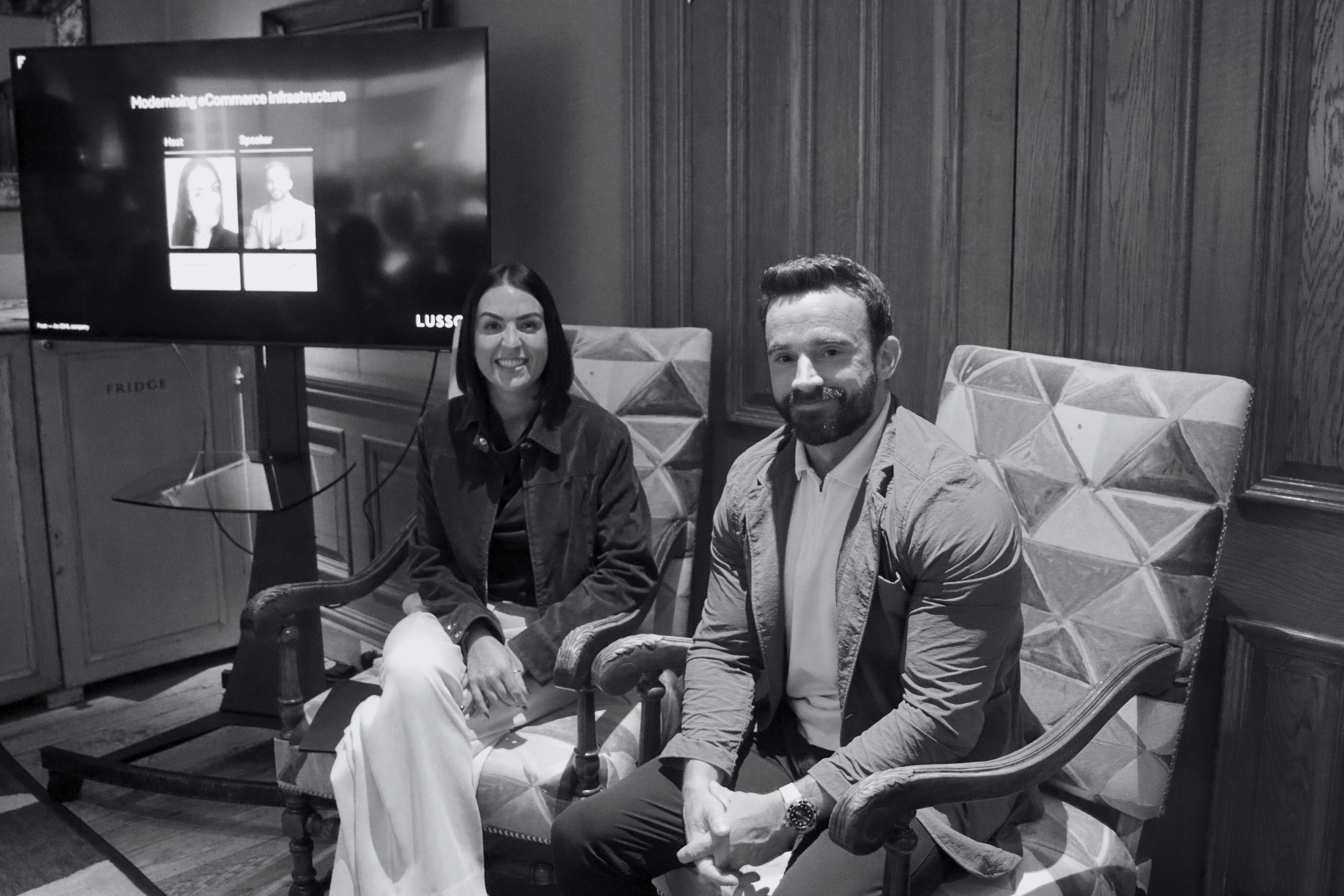
At our recent event, clients, Lusso, NEOM, and Radley shared experiences of their recent migrations to Shopify. Each had the goal of modernising how they sell and serve their customers, and although their motivations differed, their success came from the same principles: a clear business case, practical choices, and disciplined delivery.

Start with outcomes, not features
For Radley, the target outcomes were simple and measurable: a fixed annual saving on hosting and a conservative conversion uplift.
As James Fernie, Global DTC Director, put it, “The main thrust of the business case was a £300k hosting saving by switching Shopify compared to Magento, and then we predicated the rest of the case on an 8 per cent conversion uplift.” Those two lines created a straightforward payback model and set the expectation for delivery.
Following migration, the results came quickly. Radley’s US traffic rose by 55% year-on-year after going live and held that gain. The UK results were also boosted by up to 35% in the early period, and, importantly, returns declined after the team introduced larger, clearer imagery that helped customers make decisions with confidence.
Lusso took a more phased approach, but the results were equally impressive. Antony Thompson, Director of Sales and Marketing at Lusso, clearly highlighted the project's success after work wrapped up: “We launched in July, and in the same month we grew year-on-year by 22%.” Their aim was steady progress without unnecessary risk, and they achieved exactly that.
Conversely, NEOM focused on conversion at the last mile. After moving to a one-page checkout and using Shopify’s Checkout Extensibility, conversion improved by 16%. Clare Jerome, NEOM’s Technology Product Manager, offered a useful rule at that stage: “Leave my checkout alone.” In other words, protect what converts and only change it when the numbers make the case.
The thread that ties all three together is simplicity: keep the checkout process fast and clear, enhance product information and assets to help people make informed decisions, and release value early through phased releases rather than waiting for perfection.

Keeping priorities front and centre
When considering migration, approval typically hinges on two key factors: a credible promise of value and a plan that effectively manages risk. That is the centre of gravity, and everything else is detail.
Start by stating, in plain numbers, what the work will return and when. Fix the justification line first, then choose one or two sensible levers you are prepared to be measured against. Decision-makers are not buying a platform; they are buying a result they can explain. Radley did exactly that, identifying a hosting saving and achievable conversion uplift as the two key metrics that carry the case. This turned the debate into a clear investment recovery model that the board could support.
You also need to show how you will protect the downside. Set recovery timelines for search and traffic, agree how you will respond if the line dips, and be clear about ownership. Timing matters, so shape updates around the trading calendar, giving changes time to bed in before the busiest periods.
Finally, resource the foundations. Data, content, and integrations are not admin, they are the enablers that keep the plan on track. Bring the right expertise in early so the numbers you set at the start are still the numbers you can stand behind at go-live. Lusso found that giving the data work proper ownership unlocked the opportunity once they began migrating from a closed legacy platform. As Thompson added, “Give yourself ample time and make sure you have the right people at your side. Project management internally is key.”
Design that sells
Next, we need to talk about design. Good eCommerce protects brand character and shortens the path to purchase at the same time. Radley achieved this by integrating brand and eCommerce from the start. The internal brief was practical, “We are not doing shop windows, this has to sell handbags,” highlighted James. This explicit clarity kept art direction and UX in balance, allowing the brand to shine through, but not at the expense of sales.
NEOM took small, high-signal steps that customers felt quickly. Behavioural analysis showed where navigation was not doing its job, so the team reordered and simplified. It also made other small changes backed by the data, including adding a clear visual highlighting free shipping, which helped people complete sales. The point was not to redesign for its own sake, it was to remove friction wherever it had a measurable cost.
Lusso, on the other hand, took a slightly different approach to design. The brand presents bathrooms and homeware with a fashion-led aesthetic, while still giving trade users the practical tools they need. “We wanted a beautiful site for consumers, and the trade tools our partners expect, prices including VAT, downloadable technical specs and instruction manuals,” Antony added.
Overall, there was a consensus amongst those in the room that when it comes to design, start with a brief that encompasses both brand and UX, so the look and the path to purchase are decided together. Let real behaviour set the navigation, not opinion, and make product pages do the work for the customer, from fit and finish to delivery and returns. And, once checkout performs, treat it like a profit centre - improve it when the data warrants it, then protect it.
Simplicity that scales
Moving faster usually begins with taking things away. NEOM made simplicity a KPI: consolidate apps, favour native features, and use light customisation where it counts. As Clare put it, when they switched to native with minimal custom elements, “things just do not break anymore.”
Lusso had faced the same problem, but from a different perspective. Working from a closed platform, bespoke work created a fragile build that was difficult to maintain. Antony described common pitfalls of this software-type, “On the old platform, we would launch a feature, and it would break another; it became a vicious circle.” Shopify’s modern stack removed that fragility and gave the team back time to focus on more productive work streams.
For all brands with stores, simplification should also consider unifying systems. NEOM’s move to Shopify brought promotions, loyalty, and gift cards all together under one roof, massively simplifying management requirements and ensuring that customers felt one brand, and the business gained a single view of reality.
A scalable model that keeps momentum
Treat replatforming as a steady stream of progress rather than a single big moment.
Start by setting an outcome the business understands, then deliver something useful quickly and communicate what is coming next. Keep leaders close to the plan and the risk, while the delivery team stays focused on the same numbers that opened the door in the first place. That is how Radley turned approval into momentum, moving from sign-off to measurable results rather than another round of slides.
Lusso did the same in a phased way, releasing value early and keeping risk contained, which meant the site could grow without the previously experienced noise and fragility.
Working like one team
Throughout the discussion, the importance of collaboration and teamwork shone through, with the idea that work moves faster when the client and the agency behave like a single, combined team resonating with all three brands. At Radley, James described the relationship with Fostr as “confidence without ego … it just felt like one team.” That kind of partnership removes friction, shortens debates, and keeps everyone focused on what matters.

At NEOM, the eCommerce and product teams highlighted the value of a retainer, with time set aside to act on data without waiting for a new project slot. The NEOM team can make changes across the site quickly, start and stop experiments, and allocate effort where it will yield the most benefits.
At Lusso, the lesson was more about internal ownership. Lusso leadership provided data and integrations to named owners within the business, allowing agency partners to guide and deliver, but the client still holds the keys that unlock progress.
Using AI when it creates value
All three brands discussed using AI in assistive, useful ways. NEOM automates routine creative tasks and utilises analytics tools to direct work to the most effective areas. Its AI approach is not to chase novelty; it’s about saving time and lifting quality in ways they can measure.
Clare noted this AI moment feels like the early web years: “people are trying sensible use cases and keeping what works”. The practical approach is to keep the stack simple, pick a few clear trials, add guardrails, and measure the outcome against the same commercial yardstick as everything else.
What leaders should measure
At board level, a short list tells you if the programme is doing its job. How quickly the first result arrived and how long it took to land the second. Whether conversion is higher and the cost to serve is lower. Whether returns have fallen, and the most common tasks are easier for customers. Whether the platform is stable and the lead time to change is shorter than before. These signals tie delivery back to the promise that secured approval.
Radley’s early lift in the US and lower returns, NEOM’s one-page checkout, and Lusso’s phased plan all demonstrate how value can emerge while risk remains managed.
What success looks like
Finally, how do you truly quantify success? For Radley, Lusso, and NEOM, success was not defined by a launch date or an award. It was being able to move faster, sell more, and trust their platform again.
A great replatforming project does not just modernise technology; it restores belief that change is worth the effort. That is why the simple rules matter. Set a promise you can measure, deliver something tangible quickly, keep the stack tidy, let data drive design, and protect the parts of the journey that already perform well. Simple, right?
If you are working through similar challenges and requirements, the Fostr team would love to hear from you – we are always happy to compare notes. We can share the measures and strategies we used on previous projects, and hear what you are seeing in your market.
Let’s start a conversation.
// Start A Project
— Fostr